

Data privacy violations have become one of the most significant financial risks facing companies today. Recent statistics on GDPR compliance reveal that the highest fines are typically imposed for breaches of basic data protection requirements, such as “Non-compliance with general data processing principles” and “Insufficient legal basis for data processing”.
To date, GDPR violations have resulted in fines totaling over €4.6 billion, with a substantial portion of these penalties resulting from inadequate consent management practices — either failing to collect and manage proper user consent. These figures highlight the critical need for a consent management platform (CMP) to ensure data is collected and managed securely. In this way, companies can better protect themselves against penalties.
Note for publishers: Since 2024, many ad-monetized websites have observed sudden drops in AdSense revenue that were not caused by traffic loss. In most cases, the issue was not the absence of a cookie banner, but whether consent signals were collected and transmitted in a format accepted by Google for advertising in regions such as the EEA and the UK.
What is a consent management platform?
A consent management platform is software that helps organizations collect and manage users’ consent for their personal information in compliance with data protection laws and regulations. CMPs are designed to align with laws such as the European Union’s GDPR, California’s CCPA, or Brazil’s LGPD.
Simply put, when a visitor lands on a website, the website uses a CMP to get consent for collecting tracking data. The user is informed, typically through pop-ups or banners, about how their data will be collected and used. They can choose to accept, refuse, or withdraw consent for their data to be collected for specific purposes. If a user declines consent, the platform ensures that appropriate actions are taken so brands and publishers remain compliant with data protection laws.
For website owners, CMPs automate this process. They also allow for centralized management of consent notifications, making it easy to send these notices across all data collection channels.
Why do you need consent management?
As a publisher, ensuring compliance with data protection laws and other regulations is your responsibility. Using a CMP helps you stay compliant while enhancing your credibility with users. When visitors feel safe browsing your website or app, it not only builds trust but also protects you from potential legal penalties for non-compliance.
A CMP can also boost CPMs (Cost Per Mille) and fill rates for publishers by enabling more effective ad targeting and maintaining user trust. It allows you to leverage first-party verified user data to customize content and marketing strategies.
However, this benefit only applies when consent is collected and passed in a way that advertising platforms accept. For publishers using Google AdSense or similar products in the EEA or UK, incomplete or unsupported consent implementations can lead to reduced demand, non-personalized ads, or limited ad serving.
However, it’s essential to acknowledge a challenge: how effective is customization without data of those who haven’t given consent? And how can we target users who opt out? That’s where we at PEMAVOR offer a solution within the framework of side-tracking. This allows you to engage in consentless tracking while staying compliant with privacy regulations. Check out our comprehensive guide to consentless data collection with privacy compliance.
Does Google offer a CMP?
No, Google doesn’t offer its own CMP. Instead, it has a CMP Partner Program, where it certifies and partners with third-party CMP providers. These certified partners meet Google’s specific requirements and integrate seamlessly with tools like Google Consent Mode.
Important clarification: Google does not require publishers to use a paid CMP. However, for AdSense, Ad Manager, and AdMob traffic in the EEA and UK, Google requires consent signals to be collected via a CMP that is part of its CMP Partner Program. While some non-certified CMPs may be GDPR-compliant, they are not sufficient for Google publisher monetization requirements.
Why this often feels like a paid requirement: Supporting certification, consent frameworks such as IAB TCF, and ongoing compliance involves continuous operational work. Most CMP providers recover these costs through paid plans. This is a vendor pricing decision — not a direct Google mandate — but it does mean CMP compliance often becomes an additional fixed cost for publishers, even when ad revenue margins are tight.
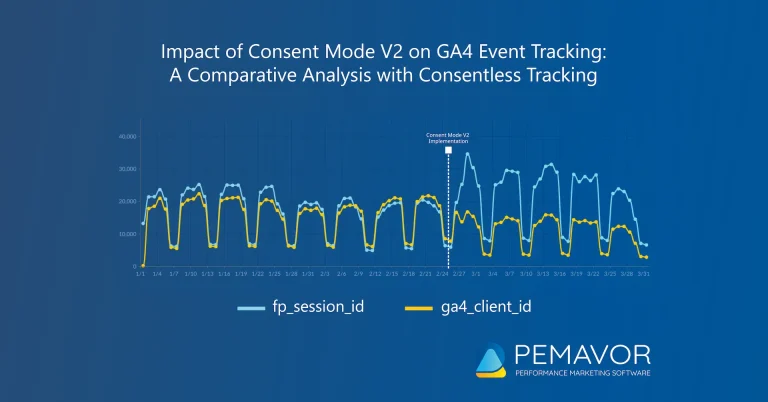
Google Consent Mode allows websites to adjust the behavior of Google tags and scripts based on the user’s consent preferences. It works by sending consent signals collected from websites via a CMP to Google tools. In this way, it ensures that data collection and processing align with the user’s choices.
How do consent management platforms work?
- Step 1: A CMP provides visitors with the appropriate notice regarding the collection and processing of personal data during their first interaction with the website.
- Step 2: It offers consumers an option to set detailed consent and preferences, rather than simply saying “yes” or “no” to all data requests.
- Step 3: The CMP records consumer preferences in a compliant format and shares them only with partners.
- Step 4: It generates the necessary audit logs to demonstrate compliance with regulatory requirements.
- Step 5: Consumers can also review and update their consent preferences at any time, ensuring ongoing compliance with their choices and current regulations.
How do consent management platforms support data privacy compliance?
Once consent is collected, it’s securely stored in a centralized consent repository, which acts as the storage engine for all data processing activities based on user consent.
A consent management engine identifies data subjects and aligns consent preferences collected through various collection points. This ensures that all data handling activities are consistent with the user’s choices.
The data privacy manager uses the centralized consent repository to store these details with the necessary level of granularity, allowing for a clear demonstration of compliant consent.
Marketing engines use consent records to ensure that all marketing communications align with data subjects’ preferences. Processing remains lawful until a data subject withdraws (opt-out of) their consent.
Organizations must ensure that withdrawing consent is straightforward and effective. This option should be enabled across all channels and be easily accessible, similar to the “unsubscribe” function in a newsletter, to ensure full compliance with privacy regulations.
How can you choose the best CMP for your business needs?
Consider these key factors before purchasing a CMP.
Compliance: If a CMP fails to keep you compliant, it could leave you vulnerable to legal troubles. In some cases, having no CMP may be better than having one that creates a false sense of compliance.
Data capturing: Your CMP should provide efficient and transparent data collection that respects user consent.
Development and integration: Consider how the CMP will fit within your existing systems. Some solutions require only a snippet, while others demand deeper integration.
Data: Some CMPs offer built-in data management tools but may lock you into their ecosystem.
Cost: CMP pricing ranges from free tiers to enterprise plans. For publishers relying on Google ad products in regulated regions, certification and framework support often introduce unavoidable fixed costs.
Integration and customization: Ensure compatibility with websites, mobile apps, CRMs, and marketing platforms.
Technical requirements and support: Choose a CMP that aligns with your team’s technical capacity and provides adequate support.
Do I need a consent management platform?
Does your business collect or process personal data? If yes, you need a consent management platform. Otherwise, managing user data preferences and building trust becomes risky.
For businesses operating in or serving users in the European Union, GDPR requires explicit consent before collecting or using personal data. A CMP automates this process and reduces compliance risk.
While some enterprises build in-house CMPs, this approach is costly and resource-intensive. A French company faced a lawsuit due to unclear consent practices and insufficient user control.
For most publishers, third-party CMPs remain the most practical option — despite the added cost — because they simplify compliance and adapt to evolving regulatory and platform requirements.
Which CMP is best?
If you monetize traffic in the EEA or UK using Google AdSense, Ad Manager, or AdMob, verify that your CMP is part of the Google CMP Partner Program. Some CMPs are better suited for analytics-only or custom consent setups and may not meet publisher advertising requirements.
Here are our suggestions from top consent management platforms:
Iubenda
Iubenda is a leading consent management platform designed to help businesses meet global privacy requirements, including GDPR, CCPA/CPRA, and more. It offers essential features like customizable consent banners (with Google Consent Mode v2 built in), automatic cookie scanning and blocking, and the generation of privacy and cookie policies. With flexible pricing starting at €2.99/month, iubenda caters to businesses of all sizes, offering scalability to meet evolving compliance needs. Its seamless integration with major CMSs like WordPress and Shopify makes it a versatile and accessible solution for teams of all sizes seeking a reliable privacy tool.
Status: Google-certified CMP Partner · Supports Google Consent Mode and IAB TCF integration for publishers serving personalized ads.
CookieYes
CookieYes is a versatile consent management platform available across major content management systems, which operates in compliance with 17 different regularity laws. It also offers fully customizable consent banners and features like a Cookie Scanner, Cookie Policy Generator, consent logs, and detailed setup guides. While the free plan is suitable for smaller projects, premium plans provide additional benefits like multilingual support and advanced customization options. The price starts at $10 mo/domain.
Status: Google-certified CMP Partner · Fully compliant with IAB TCF v2.2 and integrated with Google Consent Mode for publisher use.
Cookiehub
It offers customizable cookie banners, automatic language detection, and detailed consent logs to ensure compliance. With seamless integration options for popular website platforms, CookieHub makes managing user consents straightforward and scalable for businesses. The platform includes features like cookie scanning, flexible styling options, and compatibility with tools like Google Tag Manager. The price starts at €8/mo with a 30-day free trial.
Status: Google-certified CMP Partner · Supports IAB TCF (including TCF 2.3) and Google Consent Mode v2 with seamless integration for publishers.
Cookie Script
Its standout features include a dynamic cookie consent banner that adapts to user behavior, a robust automatic cookie scanning tool, and integrations with over 40 website platforms. Cookie-Script also offers a comprehensive analytics dashboard to monitor user consent data and provides multi-language support to reach global audiences effectively. It’s ideal for businesses looking for a flexible, easy-to-implement solution. The price starts at €8/mo with a 14-day free trial.
Status: Google-certified CMP Partner · Included in Google’s list of certified CMPs with IAB TCF v2.2 support and Google Consent Mode integration.
Usercentrics Cookiebot
It offers advanced features like real-time cookie control, customizable consent banners, and compliance automation across multiple domains. Cookiebot integrates seamlessly with various platforms and provides detailed reports on user consent, enhancing transparency. Its unique “Consent Mode” works with Google services to respect users’ privacy while collecting valuable analytics data, making it ideal for businesses seeking both compliance and insights. The price starts at €15 per domain, per month.
Status: Google-certified CMP Partner · Recognized in the Google CMP Partner Program with IAB TCF and Consent Mode support for publisher use.
Complianz
Unlike the others, Complianz is a GDPR/CCPA cookie consent plugin for WordPress. It offers automated cookie scanning, consent management, and customizable cookie banners. It also provides features for generating privacy policies, managing data requests, and integrating with popular services like Google Analytics and Tag Manager.
Status: Google-certified CMP Partner · Complianz has obtained Google CMP certification and conforms to IAB TCF v2.2 requirements for use with Google advertising products.
Klaro
Klaro [klɛro] is an open-source consent management platform (CMP) and privacy tool that helps you to be transparent about the third-party applications on your website. It supports multiple modes of asking for consent and can display third-party apps individually or grouped by purpose.
Besides, unlike Google’s Consent Mode V2, which requires a more complex setup, Klaro simplifies the process while still delivering robust compliance features. For a detailed comparison, check out our article on Consent Mode v2 implementation.
Note: While Klaro is a flexible open-source consent management tool that can be configured with IAB TCF APIs and support Google Consent Mode, it is not registered as an official IAB TCF CMP by default. To satisfy Google’s publisher consent requirements for personalized ads in the EEA/UK (which depend on recognized TCF consent strings), Klaro would need to be paired with a registered CMP implementation or formally registered through the IAB CMP process.
FAQ
How does a preference management platform (PMP) differ from a consent management platform (CMP)?
Why do businesses need a consent management platform?
How does a consent management platform work?
A CMP displays a consent prompt or banner on your site that explains what data you collect and gives visitors control over their choices. When users make selections, the CMP logs those choices and ensures that scripts, trackers, or cookies only run if permitted. It also stores consent decisions securely so you can demonstrate compliance if required.
How can organizations ensure ongoing compliance with consent management?
To stay compliant over time, a CMP should:
Track and store consent preferences safely,
Give users clear ways to change or withdraw consent,
Update policies and practices as laws evolve,
Provide audit logs in case of review,
And work with your data systems so that consent status controls what data is actually collected.
CMPs handle these ongoing tasks so you don’t have to manually track each consent decision.
Are there any open source consent management platforms?
Yes. There are open source solutions like Klaro that help you implement consent banners and manage user choices without licensing fees. While open source CMPs can be effective for basic compliance, advanced requirements (such as integration with ad tech ecosystems or IAB/Google frameworks) may require additional technical work or registration steps.
Are consent management platforms only for large enterprises?
No, any organization that collects personal data or tracks users must comply with privacy laws. That includes small blogs, hobby sites, e-commerce shops, apps, and international sites serving EU/EEA users. CMPs help ensure you respect user consent and reduce legal risk regardless of your size.
Do you need a CMP for advertising services like Google AdSense?
Yes — if you serve personalized ads to users in the EEA, UK, or similar regions, ad platforms often require that consent signals come from a certified CMP that supports industry frameworks like IAB TCF and integrates with systems like Google Consent Mode. A standard CMP alone might meet basic legal consent, but it must be recognized and integrated into these frameworks to satisfy ad monetization requirements.