

Google has introduced another round of updates aimed at simplifying the search results page, reducing clutter, and improving speed, continuing a multi-year effort to streamline SERP features.
Below is the complete timeline of changes affecting mobile display, structured data, Search Console reporting, and documentation. If you’re maintaining structured data or reporting pipelines, this update is essential.
January 2025: Google Removes Breadcrumbs from Mobile Search Results
Google rolled out a major UI simplification: breadcrumbs no longer appear on mobile search results. They remain visible on desktop, but mobile searchers now see only the domain in the visible URL line.
What changed?
- Mobile: Visible URL displays domain only
- Desktop: Still shows domain + breadcrumb
- Structured data:
- Breadcrumb markup still supported
- Breadcrumb Rich Result report remains in Search Console
- Testing still available via Rich Results Test
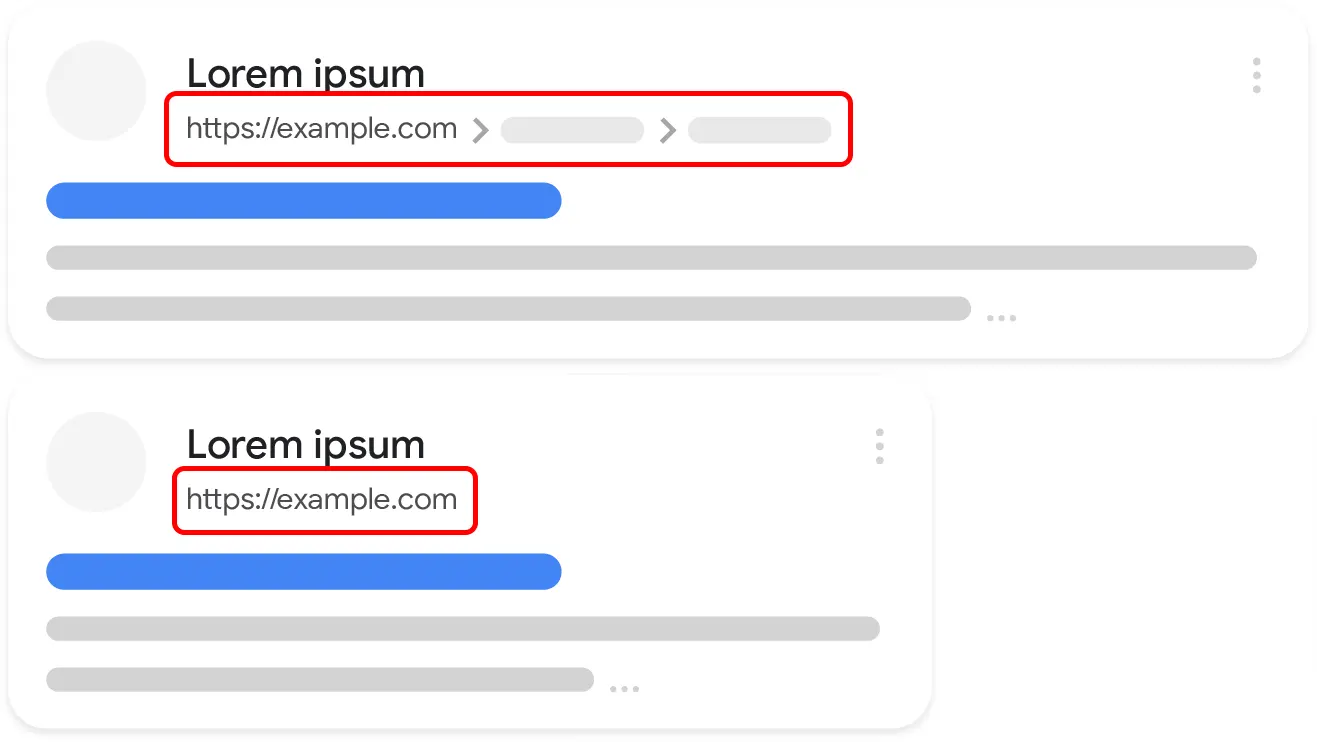
Google found that breadcrumb paths were often truncated on mobile screens and didn’t add enough value. This update improves readability and aligns with Google’s broader effort to present cleaner, more focused mobile SERPs.
June 2025: Google Retires Several Structured Data Types
In June, Google began phasing out several rarely used structured data types that no longer provide meaningful value in Search. These markups will still function outside Google Search, but their visual enhancements in SERPs are removed.
Structured data types retired from Google Search results
- Book Actions
- Course Info
- Claim Review
- Estimated Salary
- Learning Video
- Special Announcement
- Vehicle Listing
Impact
- No ranking impact
- Visual enhancements disappear
- Markup may still be useful for non-Google platforms
- Part of Google’s effort to reduce low-usage features and speed up results
September 2025: Search Console Drops Support for Deprecated Structured Data Types
On September 9, Google began removing previously retired types from Search Console.
Removed from Search Console, Rich Results Test & Search Appearance
- Course Info
- Claim Review
- Estimated Salary
- Learning Video
- Special Announcement
- Vehicle Listing
Search Console API timeline
- Support continues through December 2025
Important: BigQuery Deprecation Behavior
Starting October 1, 2025, deprecated appearance fields will return NULL, which breaks old queries.
Deprecated (breaks with NULL):
WHERE NOT is_learning_videos
Recommended, future-proof:
WHERE is_learning_videos IS NOT TRUE
This ensures dashboards, pipelines, and Looker Studio reports remain stable once NULL values propagate.
November 2025: New Simplification Announcement
Google released another confirmation of their simplification efforts, stating that several low-use search features are being phased out because:
- They trigger rarely
- Users rarely interact with them
- Other SERP advancements now answer user needs more efficiently
Google emphasizes:
“For most searches, you likely won’t notice a major difference.”
Key takeaways for SEO professionals:
- Some structured data–powered features will no longer trigger
- Pages that used these features may appear more visually plain
- No ranking impact, this is purely a surface-level cleanup
- Faster, simpler SERPs are now a priority for Google
- Site owners should monitor documentation updates for markup that loses support
Support for the deprecated structured data types will be removed from Search Console and its API starting January 2026.
November 2025 Documentation Updates
Google also published several documentation revisions that SEO teams should be aware of:
Nov 19, 2025 – Discover “Follow” Feature Removed
- All guidance removed
- Feature no longer appears in Google Discover
Nov 12, 2025 – Review & Aggregate Rating Clarifications
- Sites should avoid using multiple “what is being reviewed” signals in the same markup
- Clarifies nesting behavior to prevent ambiguous review structures
Nov 5, 2025 – Multiple Notes
- Practice Problem structured data → deprecated & removed from Search results
- Search Console support ends January 2026
- Dataset structured data
→ Only used in Dataset Search, not in Google Search - Book Actions documentation banner removed
→ A feature using this markup still exists in Search
What SEO Professionals Should Do Now
1. Audit structured data across all properties
Check for usage of these retired or soon-to-be-retired types:
- Book Actions
- Course Info
- Claim Review
- Estimated Salary
- Learning Video
- Special Announcement
- Vehicle Listing
- Practice Problem
- Dataset
If your site uses them:
- Keep schema only if needed for non-Google platforms
- Update expectations around SERP enhancements
- Remove outdated documentation for clients/stakeholders
2. Update Search Console & BigQuery reporting pipelines
Many Search Appearance metrics will return NULL going forward.
Any dashboards depending on these fields must be updated.
3. Re-check your mobile search previews
Since January, breadcrumbs no longer appear on mobile:
- Titles and domain recognition matter more
- URL structure itself is less visible
- Branding and entity clarity have increased importance
4. Monitor changelogs regularly
Google will continue publishing updates on:
- Structured data
- Search appearance
- Reporting filters
- Deprecations
Following the documentation changelog is now essential.
What Do These Changes Mean?
Google is moving toward a leaner, more efficient, AI-first SERP, with less emphasis on decorative or rarely-used elements.
For SEO teams, this means:
- More reliance on fundamentals (titles, clarity, content depth)
- Less dependence on niche structured data features
- Cleaner reporting pipelines with fewer SERP appearance categories
- A more predictable mobile UX
This shift aligns with Google’s stated goal:
“Helping you find what you need as efficiently as possible.”
Google’s 2025 changes represent one of the biggest SERP simplification efforts since the introduction of rich results. As support for older features disappears, SEO teams should focus on structured data types that still deliver value, ensure reporting accuracy, and maintain flexibility for future updates.
Stay updated with PEMAVOR’s SEO insights for the next wave of Google changes.